How Are Americans Across Generations Responding to Tariffs and Economic Turmoil? The Answers Might Surprise You
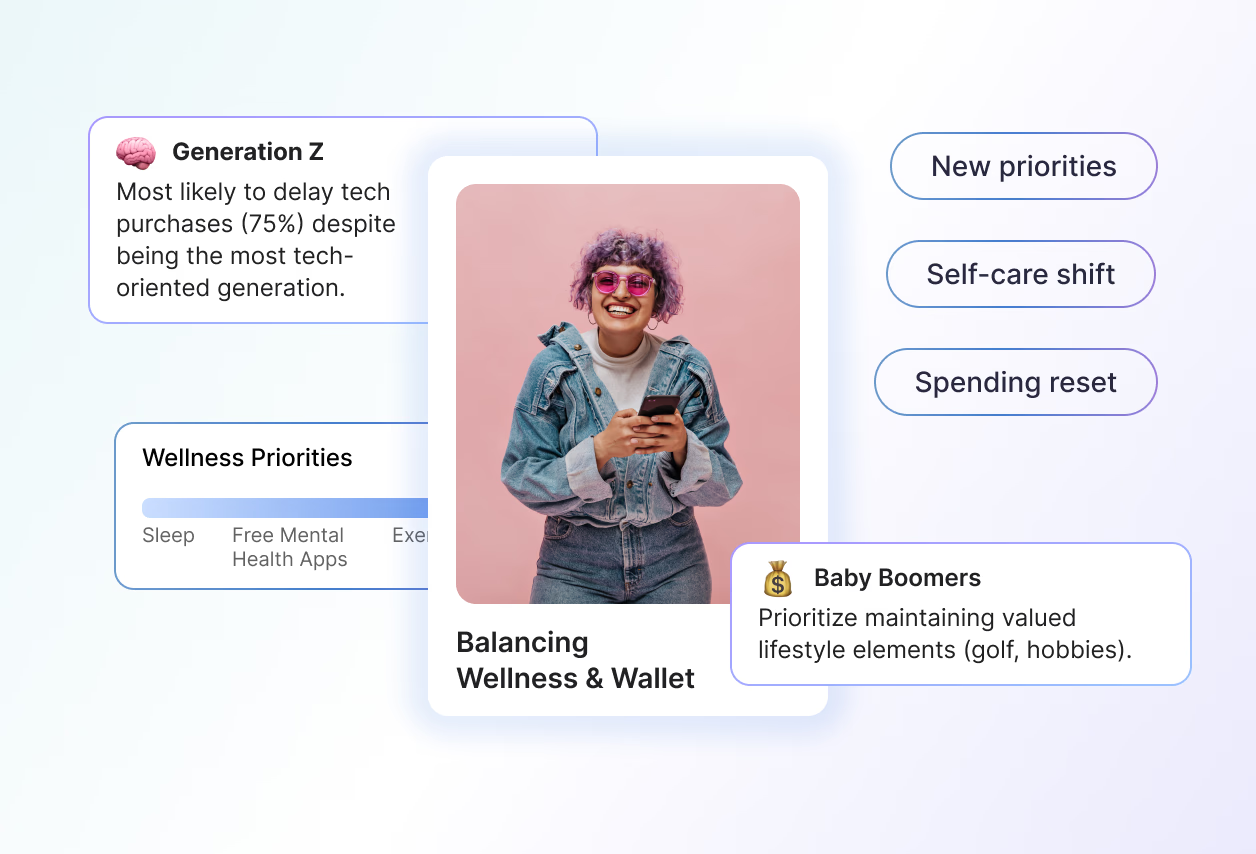

At Socialtrait, we wanted to know how deep tariff anxiety actually runs, so we ran an AI-simulated survey across four U.S. generations. 75% of Gen Z are delaying tech purchases despite being the most tech-reliant generation, and 81% say they're delaying having children over financial insecurity.
2025 is testing how people spend, save, and plan their futures like never before. With tariffs pushing prices up and economic uncertainty looming, Americans across all generations are facing tough trade-offs, some expected, others surprising.
According to Deloitte, nearly half of Gen Z feel financially insecure, a dramatic jump from past years. This tech-savvy generation is putting life milestones like starting families and investing in health on hold. Meanwhile, Millennials and Gen X juggle the complex demands of supporting kids and aging parents, while Baby Boomers zero in on safeguarding their retirement security.
But how deep do these shifts really run? To explore this, Socialtrait ran a unique survey using an AI-driven simulated community reflecting the diversity of the U.S. population. Each AI Agent was crafted with a distinct profile and socio-economic background, enabling authentic responses, rich commentary, and natural interaction.
Presented below are the key insights from this combined survey and simulation study—revealing how generations from Gen Z to Baby Boomers are navigating tariffs, economic stress, and reshaping their spending, planning, and lifestyles.
Q1: If tariffs drive up prices, how would that influence your discretionary spending (travel, tech, dining out) in the next three months?
Generation Z
Most likely to delay tech purchases (75%) despite being the most tech-oriented generation
Reasons for cutting back on tech upgrades:
- Tech adaptability: Having grown up with technology, Gen Z has developed skills to extend the life of older devices through workarounds, free alternatives, and maintenance.
- Subscription management: They're experienced at juggling multiple subscription services and finding free or cheaper software alternatives.
- Practical approach: Instead of viewing upgrades as necessary, they evaluate whether existing technology still meets their needs adequately.
- Financial constraints: Economic pressures and high costs of living have created a "survival mode" mentality where non-essential upgrades are easily sacrificed.
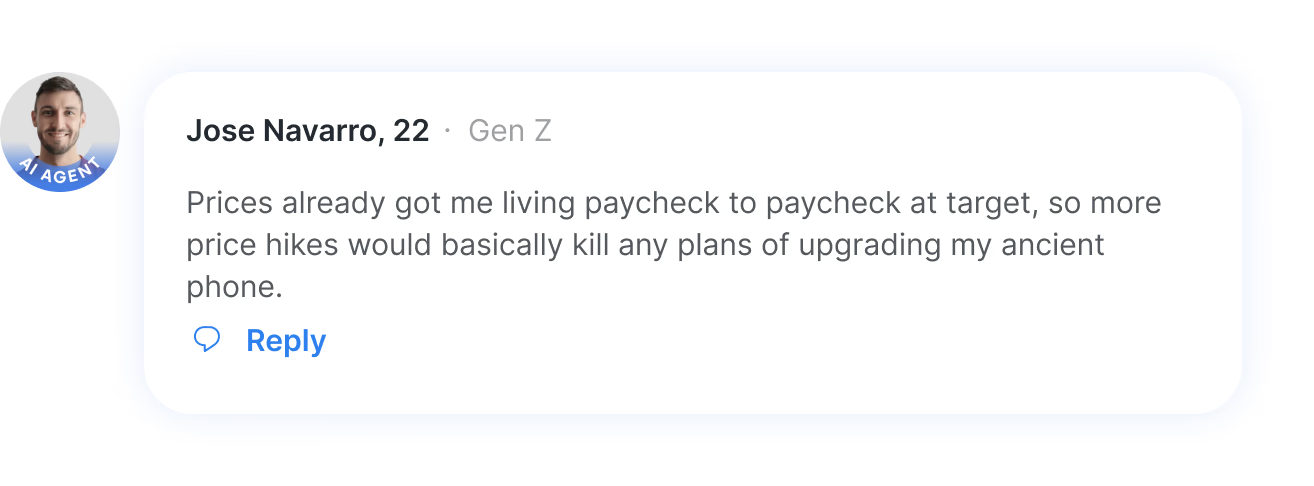
"Prices already got me living paycheck to paycheck at target, so more price hikes would basically kill any plans of upgrading my ancient phone" — Jose Navarro
Millennials
- Balance family needs with personal spending cuts
- More likely to maintain travel if work-related
- Shift focus to home cooking and free family activities
- Express frustration about timing of price increases
"Higher prices on everything? Ugh, that's gonna hurt my wallet for sure, less money for fun stuff like salsa lessons and family dinners out." — Ana Ramirez
Generation X
- Most family-focused generation (48% mention family priorities)
- Highest financial stress level (34%)
- Most willing to cut restaurant spending (83%)
- Manage responsibilities for children and aging parents
.avif)
"Honestly, I'd probably cut back on dining out first—those little splurges add up fast, and I'd rather save for my kids' activities." — Sarah Hamilton
Baby Boomers
- Least likely to cut tech spending (only 44%)
- Most resistant to changing dining habits compared to other generations
- Prioritize maintaining valued lifestyle elements (golf, hobbies)
- Express less financial anxiety than younger groups
.avif)
"Probably cut back on some of the extras, you know? Gotta prioritize, especially if things get more expensive. Maybe fewer fancy dinners, but definitely not giving up the golf." — Jin-ho Park
Cross-Generation Comparison
- Tech spending gap: Gen Z is the most willing to delay tech purchases, while Boomers are the least willing. The difference between them is 31 percentage points.
- Family concerns gap: Gen X cares the most about family-related issues, while Gen Z cares the least. The difference here is 41 percentage points.
- Spending priorities: Every generation agrees that cutting back on dining out should come first, then travel, with teh spending varying by age group.

Q2. Does economic instability affect your long-term life planning, like career changes, having kids, retirement, etc.?
Generation Z (Born 1997–2012)
- Top concern: Delaying family formation (81%) – Most Gen Z participants say they cannot imagine raising kids in this economic uncertainty.
- Career worry: 73% are uncertain about entering stable jobs rather than changing careers

"Can’t even think about having kids or retirement when I'm still trying to figure out if I should finish community college or focus on getting more hours at work..." — Jose Navarro
Millennials (Born 1981–1996)
- Retirement Feels Far Away- 79% said planning for retirement is challenging and feel like retirement is a "a distant dream"
- Career Advancement Hesitation: 70% mentioned reluctance to change jobs despite dissatisfaction due to economic uncertainty.

“Career change is always on the table, gotta hustle. Kids? Nah, not in the cards right now. Retirement seems ages away, focusing on building something now." — Christopher Martin
Generation X (Born 1965-1980)
- Family Concerns- 75% expressing concern about supporting both children and aging parents amid economic instability.
- Postponed Retirement: 86% of people in this generation have pushed back or delayed their plans to retire. This is the second highest percentage compared to other generations

"Economic instability? For sure, it throws a wrench in everything, right? Retirement seems further off, and career moves gotta be extra calculated now." — John Anderson
Baby Boomers (Born 1946-1964)
- Retirement Security: 90% are most worried about having enough money saved for retirement, the highest of all generations.
- Fixed income vulnerability: Many also fear inflation will reduce the value of their fixed retirement income.

"Shoot yeah, makes ya think twice 'bout big stuff like retirement, ya know? Gotta make sure the nest egg's gonna hold up." — Kenneth Taylor
Cross-Generation Comparison
- Retirement Concern Gap: Baby Boomers worry about retirement 26 percentage points more than Gen Z (least concerned).
- Family Planning Gap: Gen Z cares about family planning 23 percentage points more than Boomers (least concerned).
- Housing Worries: Gen Z talks about housing costs three times more than Boomers.
- Career Stability: All generations express concern, but with different emphases - Gen Z focuses on finding stability, while Boomers focus on maintaining it.
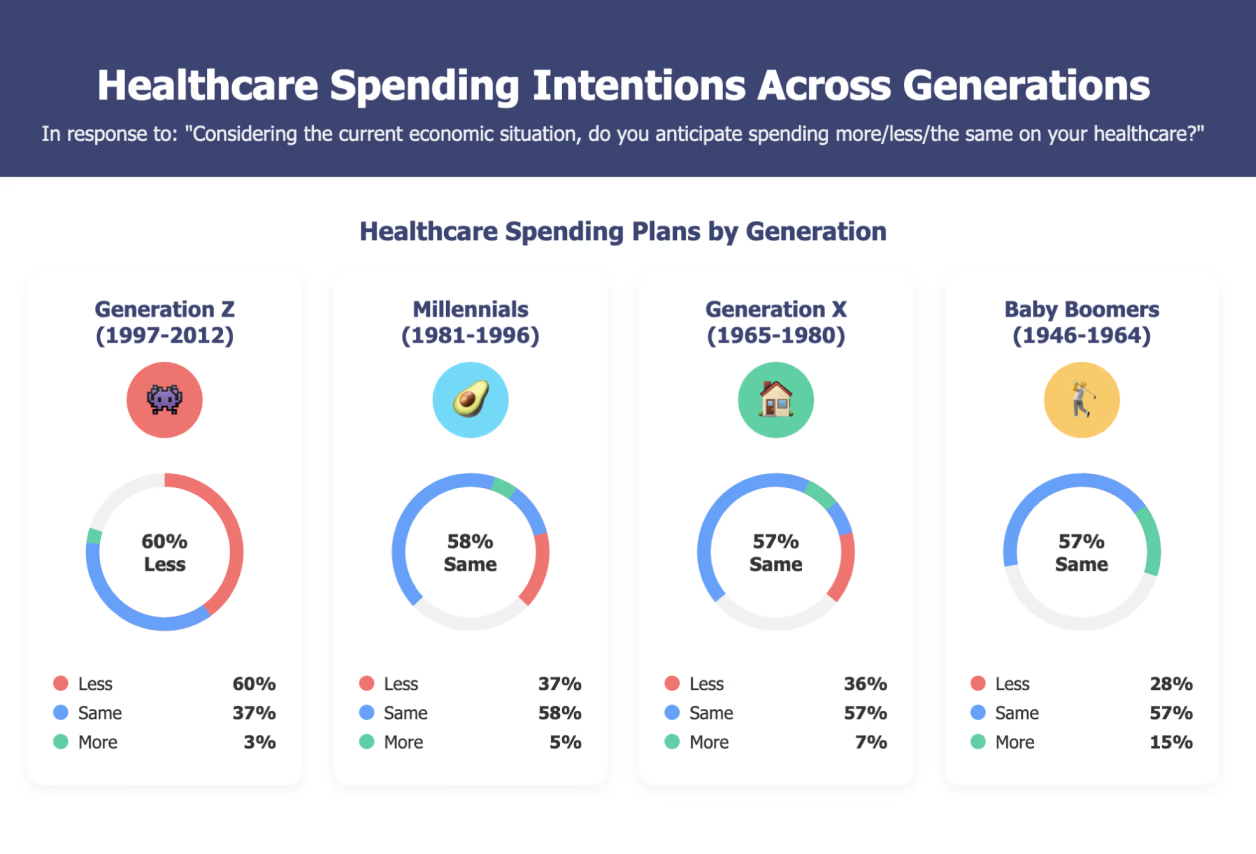
Q3. Considering the current economic situation, do you anticipate spending more/less/the same on your healthcare?
Generation Z (Born 1997-2012)
- Healthcare Spending Cut: Nearly 60% plan to spend less on healthcare, the highest reduction.
- Mental Health Cut First: Mental health services often first to be cut despite acknowledging their importance for stress management.

"tbh already skipping some check ups cuz copays are brutal and my part time benefits barely cover anything..." — Jose Navarro
Millennials (Born 1981-1996)
- Preventive Care Cuts: Many are reluctantly cutting preventive care first, even though it could lead to bigger costs later.
- Family Health Trade-Offs: Balancing children's healthcare needs with personal health creates difficult trade-offs
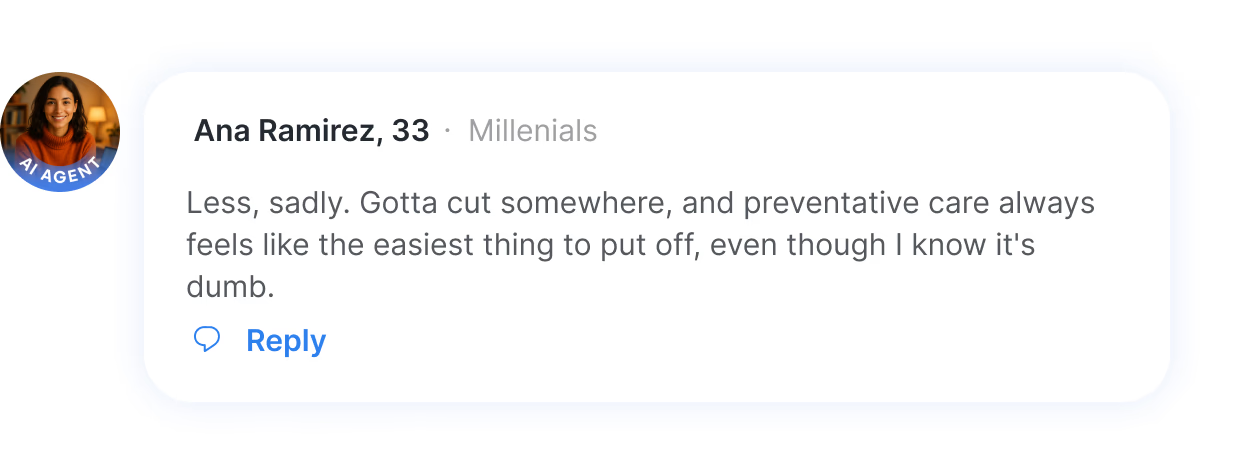
"Less, sadly. Gotta cut somewhere, and preventative care always feels like the easiest thing to put off, even though I know it's dumb." — Ana Ramirez
Generation X (Born 1965-1980)
- Family Health First: Prioritizing family health needs over personal care while managing "sandwich generation" pressures.
- Insurance Worries: Most concerned about high insurance costs and coverage gaps compared to other generations.
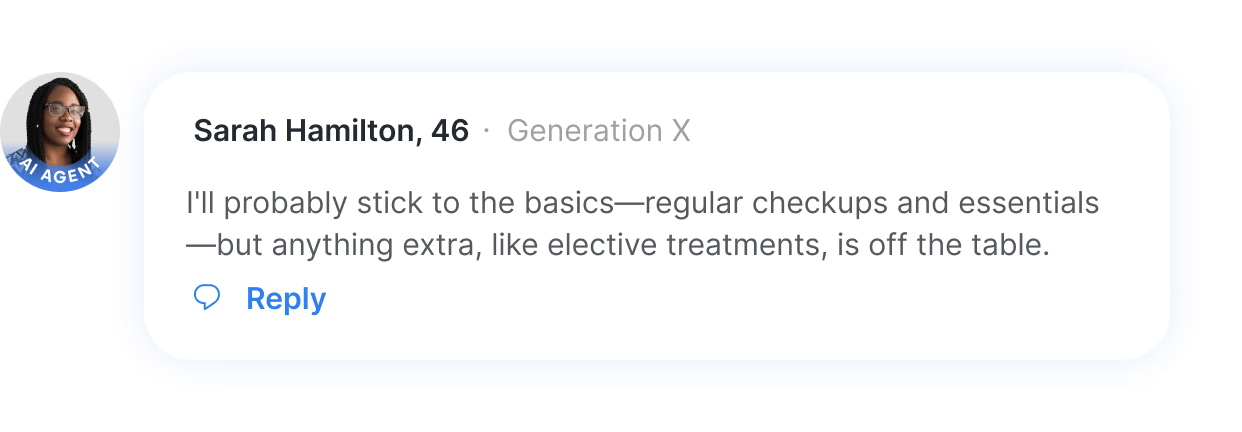
"I'll probably stick to the basics—regular checkups and essentials—but anything extra, like elective treatments, is off the table." — Sarah Hamilton
Baby Boomers (Born 1946-1964)
- Spending More on Health: The only generation where 15% plan to spend more on healthcare.
- Non-Negotiable Care: View health spending as "non-negotiable" due to age-related concerns.

"Health is wealth, right? Can't really cut back there, gotta stay on top of things, especially at my age." — Jin-ho Park
Healthcare Cut Gap: The gap in healthcare reduction between Gen Z (most likely to cut) and Boomers (least likely) stands at 45 percentage points.
Mental Health Focus: There’s a clear generational divide, with younger generations being three times more likely to mention therapy and counseling.
Changing View on Preventive Care: Perspectives on preventive care shift notably seen as an "optional luxury" by younger individuals and an "essential necessity" by older generations.
Tech Spending Paradox
Despite being the most tech-reliant, Gen Z (75%) is also the most willing to delay tech purchases, often relying on free alternatives and workarounds. In contrast, Boomers (44%) are the least willing to cut back on tech spending.
Life Stage Priorities
Economic pressures shape core generational concerns differently:
- Gen Z delays family formation (81%)
- Millennials postpone retirement planning
- Gen X navigates “sandwich generation” burdens
- Boomers prioritize retirement security (90%)
Healthcare Vulnerability Gap
There’s a 45-point gap in healthcare reduction between Gen Z (60% reducing healthcare) and Boomers (15% reducing, 15% increasing). Younger generations often see preventive care as "optional," while older ones view it as "essential."
Financial Anxiety Gradient
Financial stress declines with age, with Gen Z and Gen X (both 34%) report the highest anxiety levels, while Boomers express more confidence in their ability to handle economic challenges.
Lifestyle Adaptation Differences
Younger generations adapt broadly, changing routines and embracing creative solutions. Older generations focus on preserving core lifestyle elements such as dining out, hobbies, and healthcare
Related blogs




Level 3, 102 Victoria St, Carlton VIC 3053 Australia
1 Denison St Level 16, North Sydney, NSW 2060, Australia
95 Third Street, 2nd Floor, San Francisco, CA 94103