How AI Is Changing FMCG & Retail (And What We Learned at Connected Commerce Summit London)
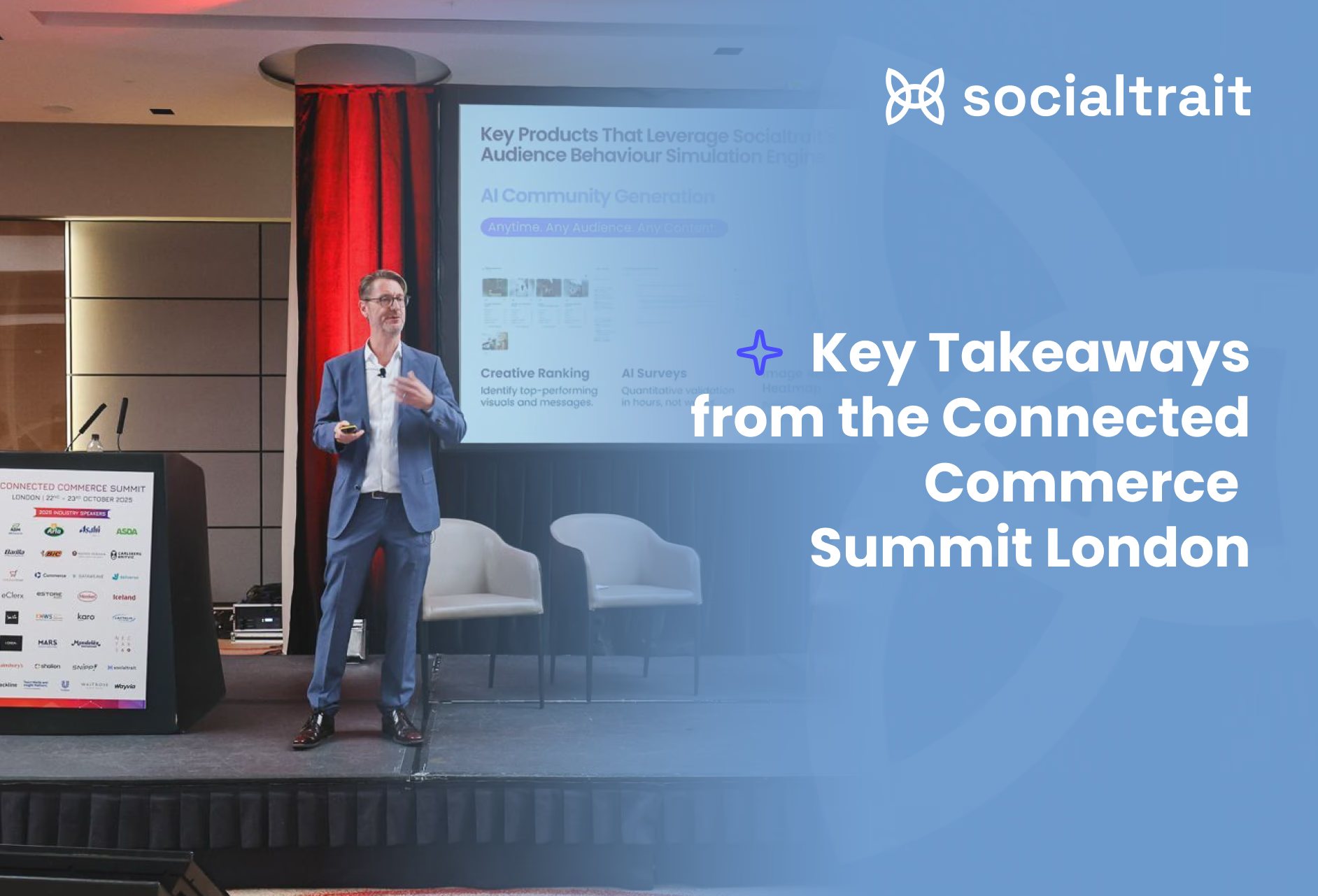

At the Connected Commerce Summit 2025 in London, Socialtrait ran a live demo re-testing Galbani UK's landing-page carousel on stage and caught a CTA sitting invisible in a cold zone, flagged by our Attention Heatmap in minutes. The FMCG AI market alone is projected to grow from $7.9 billion in 2023 to $57.7 billion by 2033.
The Connected Commerce Summit 2025 in London wasn’t just another industry event, it was a pulse check on where FMCG and retail are heading next.
The hall was packed with global leaders, all chasing one question: how far can AI really go?
Just hours earlier, panelists debated how artificial intelligence could reshape product development, supply chains, and shopper engagement. But when the Socialtrait team took the stage for its “Simulate Before You Sell” workshop, curiosity turned into anticipation.
Gareth Lofthouse, Director at Socialtrait UK, opened the session by grounding the audience in what Socialtrait does best, helping brands predict how real shoppers will respond before campaigns or products hit the market.
He walked through how Fortune 500s use AI-powered synthetic audiences to reduce risk and align creative strategy with actual consumer psychology, not guesswork. From validating wellness packaging claims to running pre-launch rebrands, Gareth made one thing clear: with the right simulation tools, bold ideas no longer have to be risky.
Then came the live demo.
Using a Socialtrait AI Community of affluent UK women aged 35–54, Suraj Narayan Sasikumar, our CTO and Co-founder, analysed Galbani UK’s seven-image landing page carousel in real time for audience alignment and uncovered the hidden tension between authenticity and aesthetics.
He first ran a Creative Ranking study, which mirrored Galbani’s real-world sequence with a single difference: image 6 jumped from sixth to third because it scored highest on “interest.”
A follow-up Focus Group Discussion revealed why the image blended trusted quality cues like D.O.P and Great Taste awards with warm, lifestyle-driven storytelling, bridging two audience motivations: objective authenticity and emotional resonance.
Suraj then put a top creative through Socialtrait’s Attention Heatmap, which highlighted strong focus on the headline and hero image but exposed a low-visibility CTA sitting in a cold zone due to its ghost-button design.
In minutes, the demo showed how Socialtrait doesn’t just replicate real audience behaviour, it explains it, validates it, and surfaces clear optimisation opportunities that traditionally take weeks, illustrating the practical power of synthetic research for creative and UX teams.
In FMCG and retail, every creative decision carries risk: wasted budget, lost time, and missed opportunities.
Knowing before launch what will move your audience changes everything.
That’s what makes AI-driven pre-testing especially through synthetic audiences, more than a research tool. It’s a creative safety net that protects budgets, accelerates decision-making, and ensures measurable impact.
With Socialtrait, what once took weeks of recruitment, moderation, and analysis now happens in hours, with richer insights and zero guesswork.
The global AI-in-FMCG market is projected to grow from $7.9 billion in 2023 to $57.7 billion by 2033, at a staggering 22% growth rate. And that’s not because companies are selling more shampoo and snacks, it’s because they’re reimagining how those products are made, marketed, and sold.
Few industries feel pressure like FMCG and retail. Speed to market is everything — trends rise and fall in weeks, not years. One viral moment can spike demand overnight; one supply chain hiccup can derail an entire quarter.
Then there’s the complexity of digital + physical channels — stores, apps, retail media, and e-commerce all have to work together seamlessly.
It’s exactly what McKinsey points out: AI and automation aren’t just efficiency tools here, they’re transformation engines for the modern consumer enterprise.
Brands are chasing a handful of powerful value levers:
- Demand forecasting that can anticipate shifts before they happen.
- Product innovation that aligns with fast-changing consumer needs.
- Hyper-personalisation that makes every message feel relevant.
- Retail execution that connects insight to action,seamlessly across channels.
This is why AI feels different in FMCG and retail, it’s not about doing more; it’s about staying ahead of change itself.
At the London summit, Gareth Lofthouse opened with the reality everyone felt, the economic and geopolitical backdrop is tough. Brands are chasing growth amid rising prices and shrinking budgets. As Lactalis shared, digital commerce teams are under pressure to deliver more with fewer resources.
Amid that tension, clear trends stood out:
- Hyper-personalisation is here. We’re now in a phase of hyper-targeting, not just knowing your audience, but anticipating them.
- Mobile first remains the frontline for engagement.
- Retail media and digital screens are booming, but one speaker challenged their true value: “Is it fit for purpose?”
- D2C is gaining ground, with brands exploring direct consumer relationships.
- Data ethics and responsible AI are now part of every innovation conversation.
- Sustainability and health continue to drive consumer choice.
Then the spotlight turned to AI, a mix of excitement and hesitation. Everyone sees the potential, but most are still finding their way. Many teams aren’t even allowed to use generative tools with sensitive data. According to a resource, most FMCG and retail brands are still piloting or planning, with only about 3% fully deployed. Yet 85% of leaders want faster progress.
Swagat from Mars nailed the challenge, brands must be credible and likeable, often measured through positive reviews. But how do you predict which products or campaigns will win that credibility before launch?
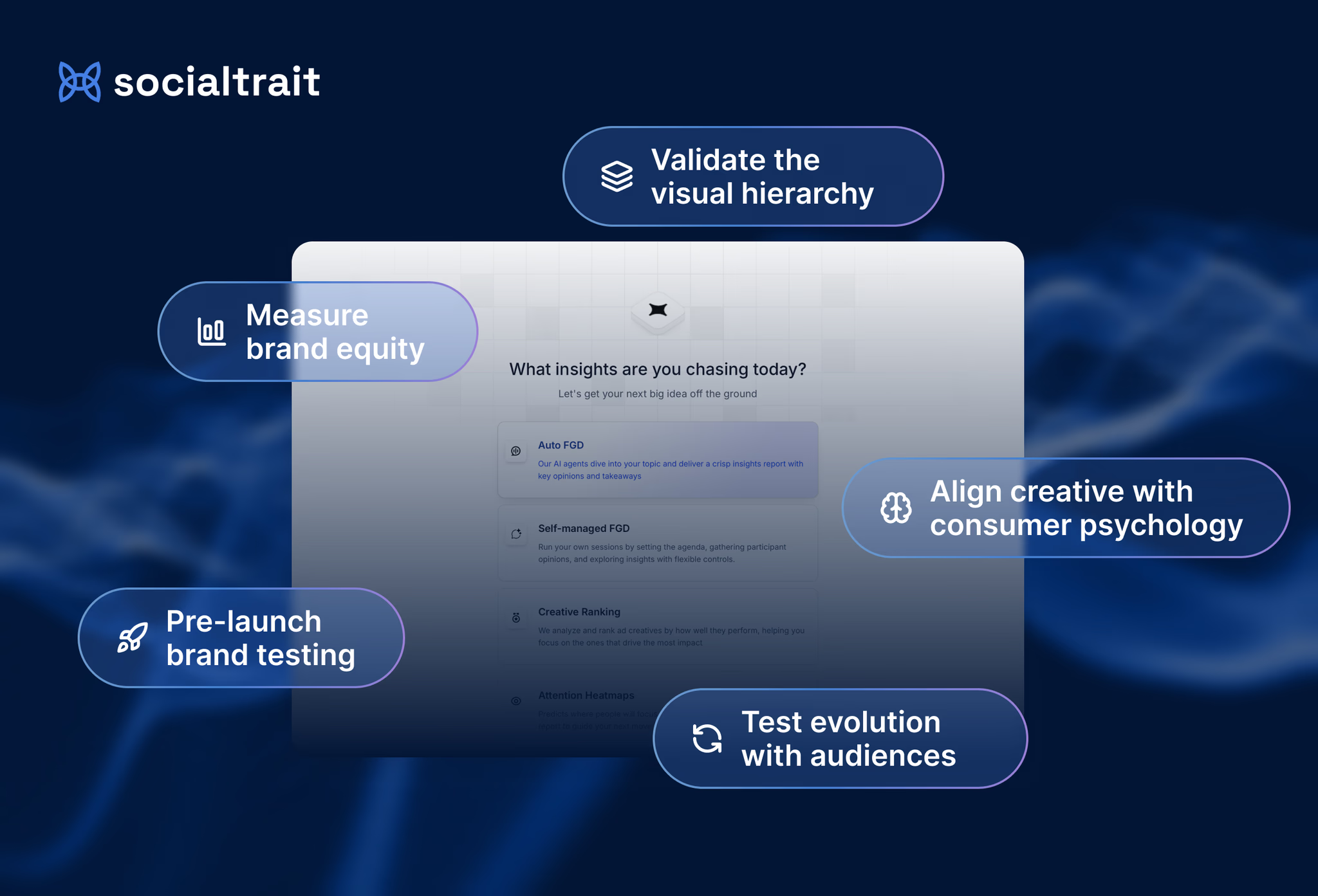
That’s where the Socialtrait workshop resonated. It showed how synthetic research and predictive simulation can model shopper behaviour before anything goes live.
Key takeaways from the session:
- AI simulation is redefining retail readiness. Brands can now model shopper behaviour and test visuals, messaging, and concepts across segments in hours, not weeks.
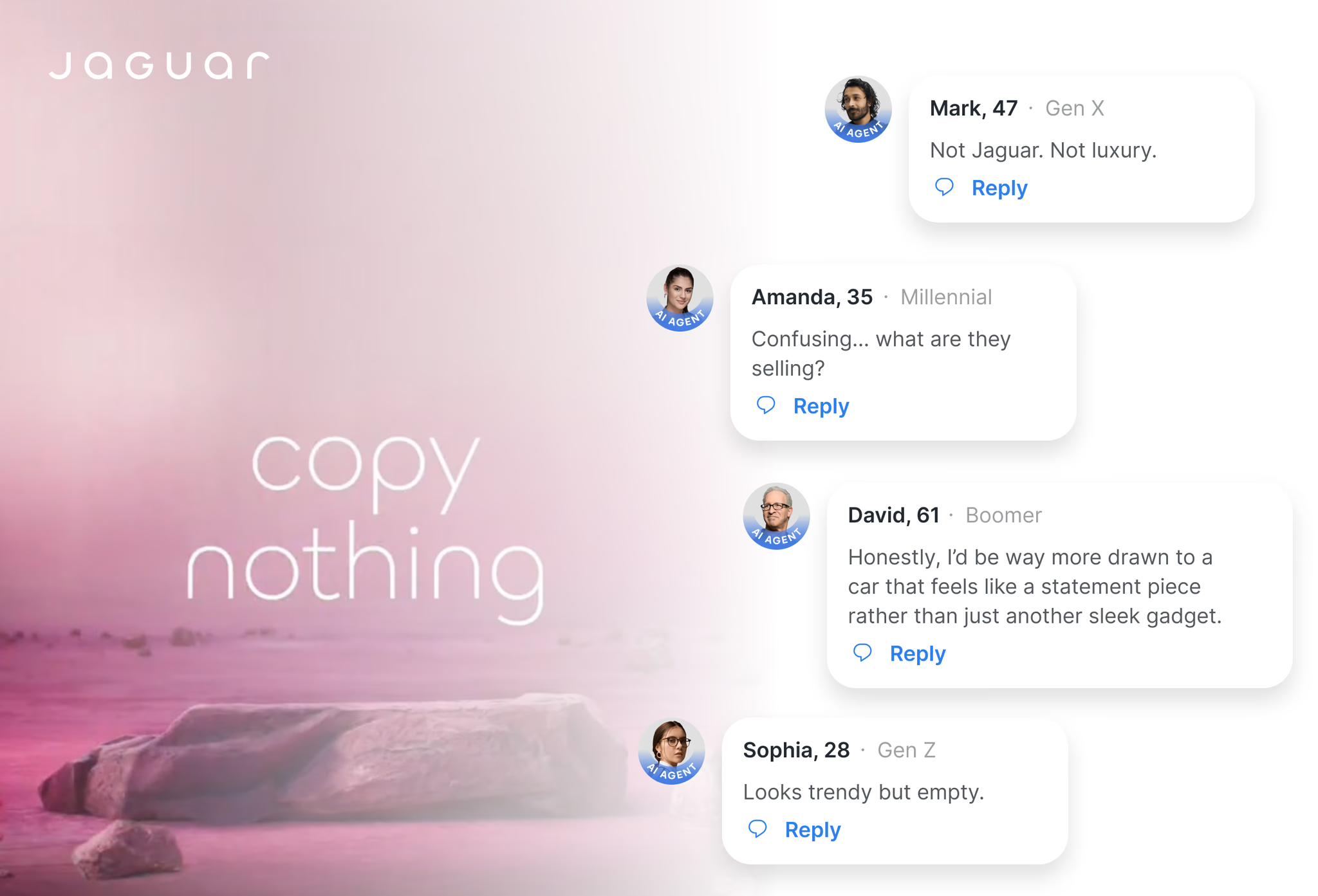
- Creative risk is measurable. Predictive agents showed which ideas connect emotionally and which could alienate — letting teams stay bold, but informed.
- Cross-segment testing reveals hidden divides. What lands with Gen Z may miss with Boomers. Simulation helps close that gap early.
- AI isn’t replacing intuition. The best results come when human creativity meets predictive simulation.
“When your audience is simulated, surprises are optional.”
These lessons captured the mood across the summit, FMCG and retail leaders aren’t waiting for certainty anymore. They’re ready to simulate it.
Before we talk about where AI shapes brand strategy and creative decisions, it helps to see where FMCG companies are already investing today.
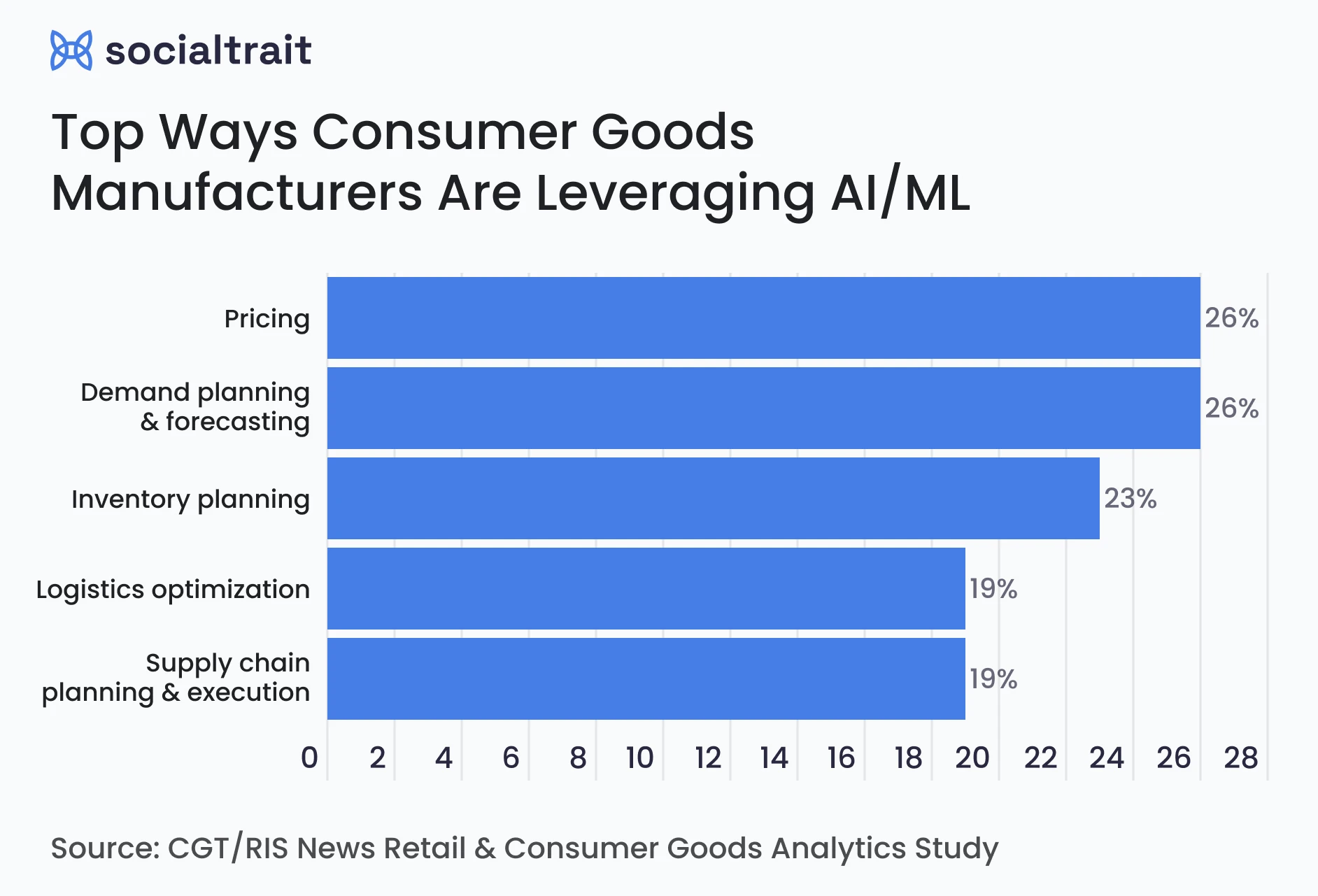
Across the industry, the biggest and earliest wins have shown up in the supply chain: pricing models, demand forecasting, inventory planning, logistics. These are the areas that feel volatility first, so it’s no surprise AI landed there early.
But the shift gaining momentum now is different.
The predictive intelligence once used to plan demand is now being used to understand demand before it happens powered by behavioural modelling and synthetic audiences.
Here’s how that transformation plays out across the value chain:
1. Consumer Insights & Audience Simulation
Before a pack redesign, campaign concept, or new product launch, teams are now using simulated audiences to anticipate how real consumers will respond.
Platforms like Socialtrait build AI agents that reflect real demographics, attitudes, and buying behaviours. These agents react to messaging, visuals, and claims like real people, allowing teams to test ideas before they hit the market.
A recent industry analysis notes that insight teams are using AI not just to measure behaviour, but to model it.
The result is faster decisions with much lower launch risk.
2. Creative & Packaging Testing
Every design detail matters, colour, hierarchy, claim wording, even how a product is held in-store.
AI heatmaps and gaze-path testing now show where attention lands, what gets ignored, and how different groups respond.
Brands are comparing Gen Z vs. families vs. premium buyers in hours, not weeks and adjusting creative before production.
This isn’t traditional testing.
It's behaviourally-driven creative optimisation.
3. Marketing & Personalisation
Once campaigns go live, AI keeps shaping the journey.
Predictive models tailor offers, content, and messaging in real time, moving marketers from reacting to past actions to anticipating future needs.
McKinsey notes that companies using AI-driven personalization can see a 10-15% increase in sales, as well as a 10-20% improvement in customer satisfaction.
4. Operations & Supply Chain
Behind the scenes, AI continues to strengthen the backbone of FMCG:
demand forecasting, production planning, routing, inventory allocation.
Leading brands now model everything from weather shifts to social trends to forecast demand at a regional and even store-by-store level.
The outcome is simple:
less waste, more precision, faster response.
5. Ethics & Trust
As AI becomes embedded in brand decisions, trust becomes the differentiator.
Responsible systems are transparent about how data is used, how models work, and where biases may sit.
Teams now evaluate not just performance, but fairness and clarity of algorithms.
Because at the end of the day, AI is here to understand people, not objectify them.
Related blogs




Level 3, 102 Victoria St, Carlton VIC 3053 Australia
1 Denison St Level 16, North Sydney, NSW 2060, Australia
95 Third Street, 2nd Floor, San Francisco, CA 94103